

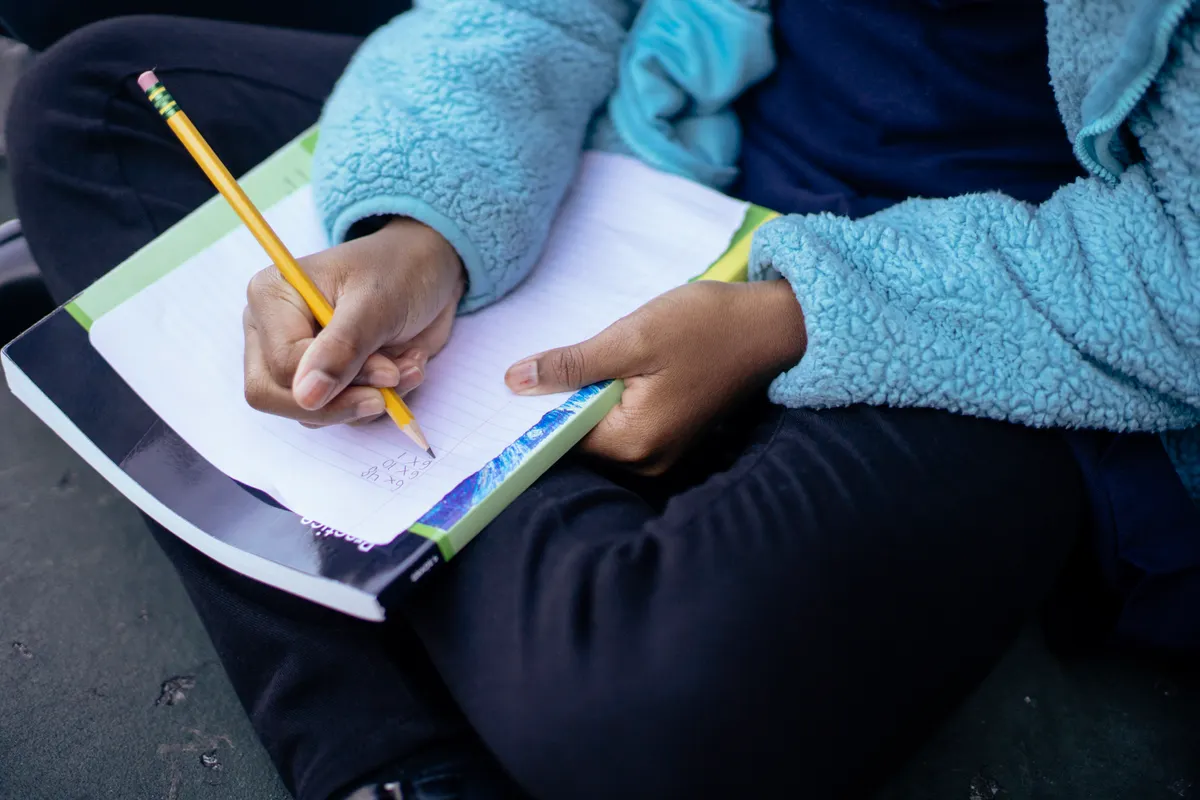
Writing involves several tasks, and a child may need different support for each. A tutoring discussion can separate putting ideas on the page from handwriting, spelling, organization, or revising.
Use an actual assignment as a starting point
Choose a recent piece of writing and note what the task required. Explain whether an adult supplied ideas, dictated words, or helped with editing. That context matters when comparing the work with something the child completes more independently later.
Pick one manageable focus
Ask the tutor which part of the assignment is a useful place to begin. A discussion goal might concern organizing a paragraph, expanding a sentence, or checking a draft. These are examples to adapt with the tutor, not prescribed targets for a particular age or disability. Keep other concerns on a separate list so they're not forgotten.
Review the process as well as the finished page
Ask what the child did independently, what prompts were used, and how long the task took. A polished page completed with extensive adult help tells a different story from a less polished independent attempt. Keep dated samples and discuss changes without expecting a fixed amount of improvement after a set number of hours.
Your next-step checklist
- Save the assignment instructions with the sample.
- Record the help the child received.
- Choose one writing skill to review next.
Build your personal checklist or map a learning goal.
Related guides
Official background: NYCPS: The IEP. Sources checked October 15, 2026. These checklists help organize your questions; follow current official instructions and your own documents.
General information, not legal advice. Time limits apply. Speak to a qualified advocate or attorney about your situation.
